
Concerned that your missing teeth might affect your smile, chewing or confidence? Picking the right replacement is important for your looks and dental hygiene, the conventional fix of dental bridges vs a modern solution of a dental implant. Understanding the benefits, negatives, and advantages of each option is essential to figure out which one will be most useful for you in 2026.
Dental clinics today provide both options, allowing patients to weigh the bridge or implant, which is better for their long-term oral health and lifestyle.
What are Dental Bridges?
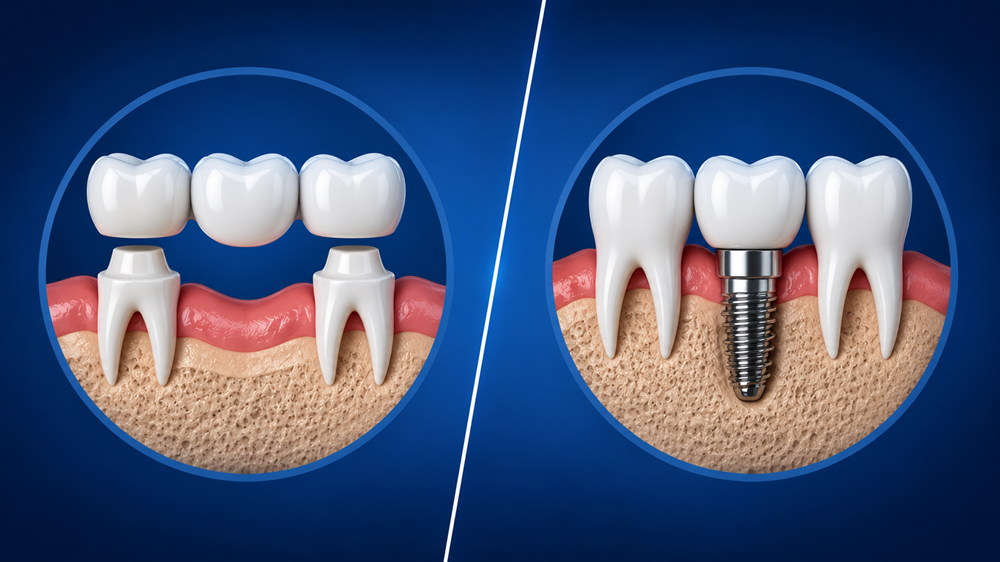
Dental bridges are prosthetic devices that “bridge” the gap created by one or more missing teeth. They consist of artificial teeth anchored to neighboring natural teeth or crowns.
Key points about dental bridges near you:
- Quick solution – usually completed in 2–3 visits
- Non-surgical – avoids the need for surgery.
- Improves appearance and function – restores smile and basic chewing ability.
While bridges are convenient, they may require modifying adjacent teeth and do not prevent bone loss in the jaw where the tooth is missing.
What are Dental Implants?
Dental implants are small titanium posts surgically placed into the jawbone to replace missing tooth roots. After healing, a crown is attached to complete the tooth replacement.
Dental implant vs bridge pros and cons include:
- Longevity – implants can last decades with proper care
- Bone preservation – stimulates the jawbone and prevents shrinkage
- Independent support – does not require altering neighboring teeth
The process is more invasive and may take several months, but implants are generally considered the most tooth-preserving option.
Comparing Dental Bridges and Dental Implants
Here’s a clear comparison for easier decision-making:
| Feature | Dental Bridges | Dental Implants |
| Procedure Time | 2–3 visits over a few weeks | Several months including healing |
| Surgery | Not required | Surgical placement needed |
| Bone Health | Does not prevent bone loss | Preserves jawbone health |
| Longevity | 5–15 years | 20+ years, often lifelong |
| Cost | Lower upfront cost | Higher initial cost, long-term value |
| Adjacent Teeth | May need shaping | Remains untouched |
| Comfort | Feels like natural teeth | Very natural feel and stability |
This comparison helps patients consider both short-term convenience and long-term oral health when deciding between a bridge and an implant.
Benefits of Dental Bridges
Dental bridges are still a popular choice for many patients. Their main benefits include:
- Faster replacement of missing teeth
- Improved smile aesthetics immediately
- Cost-effective for smaller gaps
- Non-invasive procedure
Bridges are suitable for patients who want a reliable solution without undergoing surgery.
Benefits of Dental Implants
Dental implants are a modern and long-lasting way to replace missing teeth. They offer many simple benefits:
Help stop bone loss in the jaw.
- Feel and work like real teeth.
- Very successful when cared for properly
- Do not affect nearby teeth.
- Help keep your mouth healthy for a long time.
Dental implants are a great choice if you want a strong, long-term solution that protects your natural teeth.
How to Decide: Bridge or Implant?
When deciding between a bridge or an implant, consider:
- Oral health condition – bone density, gum health
- Budget and cost considerations
- Time and convenience
- Long-term maintenance goals
Discussing your options with a qualified dentist ensures you make a decision tailored to your specific needs.
Long-Term Care for Both Options
Whether you choose a bridge or an implant, taking good care of it will help it last longer:
- Brush and floss every day
- Avoid very hard or sticky foods.
- Visit a dental clinic in Kingsway mall regularly.
- Wear a mouthguard during sports if needed.
Keeping your mouth clean and following your dentist’s advice will help your treatment last for a long time.
Making the Right Choice in 2026
There are two effective tooth loss solutions: dental bridges and implants. With bridges, patients will be able to resolve their issues quickly at a low cost. Alternatively, implants are more permanent and save remaining healthy teeth. You should review your oral health, lifestyle, and budget to assess which option is best for you.
Restore Your Smile with Confidence!
Explore the best tooth replacement options at Kingsway Dental Choice. Get simple guidance, caring treatment, and results made just for you. With regular follow-ups and personalized care, you can get your smile back, chew and speak better, and feel more confident. Book your consultation today and take the first step toward a healthy and happy smile!
FAQs
How long does a dental bridge last?
With good care, a dental bridge can last about 10 to 15 years. Regular dental visits and keeping your teeth clean are very important.
Is the implant procedure painful?
The dentist uses numbing medicine so that you won’t feel much pain during the procedure. After it’s done, you may feel a little soreness, which can be managed with simple pain medicine.
Can children get dental implants?
Dental implants are usually for adults because the jaw needs to grow fully first. For children, dentists may suggest bridges or other temporary options until they are older.
Does insurance cover implants?
It depends on your plan. Some insurance plans may cover part of the cost of implants, while bridges may be covered fully or partly.